6 Key Standards of a Good Mattress
A mattress is more than just a place to sleep—it directly impacts your long-term health and daily recovery.
Instead of focusing on complicated technical terms, you can evaluate a mattress with a few simple, practical checks. Here are six essential standards to determine whether your mattress truly meets the mark.
1. Breathability: Does the Mattress Stay Dry Overnight?
What matters: The ability to dissipate heat and moisture generated during sleep.
How to check:
When you wake up, touch the mattresssurface or under the bedsheet.
What a good mattress should do:
A high-quality mattress remains dry and comfortable. Materials like plant fibers or well-designed internal structures help wick away moisture and prevent heat buildup.
2. Support: Does Your Spine Stay in a Natural Position?
What matters: Proper support that maintains the natural curve of your spine.
How to check:
When lying on your back, try sliding your hand under your lower back
When lying on your side, observe how your shoulders and hips sink
What a good mattress should do:
Your hand fits comfortably under your lower back without pressure
Shoulders sink about 2–4 cm
Hips sink about 2–3 cm
This indicates the mattress adapts to your body and distributes weight evenly.
3. Comfort: Does the Surface Feel Soft and Skin-Friendly?
What matters: The tactile experience and how the mattress surface interacts with your body.
How to check:
Lie down and feel how the fabric touches your skin.
What a good mattress should do:
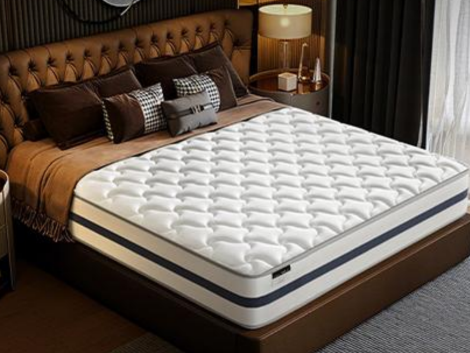
The surface should feel smooth, soft, and non-irritating. It should conform naturally to your body without causing pressure points or friction.
4. Safety: Are the Materials Non-Toxic?
What matters: Whether the mattress is made from safe, non-harmful materials.
How to check:
Review material descriptions and certification reports.
What a good mattress should do:
Use natural or certified safe materials such as latex or plant-based fibers
Meet safety standards for formaldehyde and TVOC emissions
Ideally, emissions should be well below required limits or not detected
5. Noise Level: Does the Mattress Stay Silent?
What matters: Whether movement creates noise that disrupts sleep.
How to check:
Lie down, turn over, and get up while listening carefully.
What a good mattress should do:
A quality mattress remains nearly silent. Designs without metal friction or with well-constructed internal systems minimize noise.
6. Radiation Safety: Are the Materials Free from Potential Risks?
What matters: Avoiding materials that may introduce unwanted electromagnetic or radiation concerns.
How to check:
Focus on material composition and structure.
What a good mattress should do:
Natural materials such as plant fibers, latex, and foam are generally free from radiation concerns. Non-radiative structures are safer for long-term use.
Final Evaluation Guide
You can quickly assess your mattress based on these six standards:
6/6 met: Excellent choice—your mattress is a long-term health partner
4–5 met: Acceptable, but with some limitations
3 or fewer: Not recommended—may negatively affect sleep and health
Final Thoughts
A mattress is a silent guardian of your health.
A truly good mattress doesn’t rely on short-term comfort alone—it consistently supports your body night after night, year after year. Choosing the right one is not about instant luxury, but about long-term well-being.