How to Choose the Right Mattress: A Practical Guide to Types, Support, and Materials
Choosing the right mattress is not just about comfort—it directly affects sleep quality and long-term health. To make an informed decision, it’s important to understand mattress types, support layers, fabric materials, and filling components.
This guide breaks down the key factors to help you select a mattress that truly fits your needs.
Mattress Types Explained
Different mattress types offer different sleeping experiences. Understanding their characteristics can help you narrow down your options.
1. Spring Mattress
Spring mattresses are one of the most common choices in the market. They provide:
Strong support
Good motion isolation (especially advanced designs)
Quiet performance
Better body contouring compared to traditional models
Best for: Most sleepers, especially those who need balanced support and comfort.
2. Memory Foam Mattress
Memory foam mattresses are known for:
Pressure relief
Body-contouring support
Comfortable “hugging” feeling
However, they may have:
Lower breathability
Reduced support for heavier users
Best for: People who prefer a softer feel with strong body contouring.
3. Latex Mattress
Latex mattresses offer:
Excellent breathability
Natural resistance to bacteria and dust mites
High elasticity and responsiveness
But:
They can oxidize over time
Not suitable for people with latex allergies
Best for: Users who prioritize airflow and responsiveness.
4. Palm (Coir) Mattress
Palm fiber mattresses are:
Firm and supportive
Breathable and eco-friendly
More affordable
However:
They may deform over time
Durability can be limited
Best for: People who prefer a firm sleeping surface.
Understanding the Support Layer
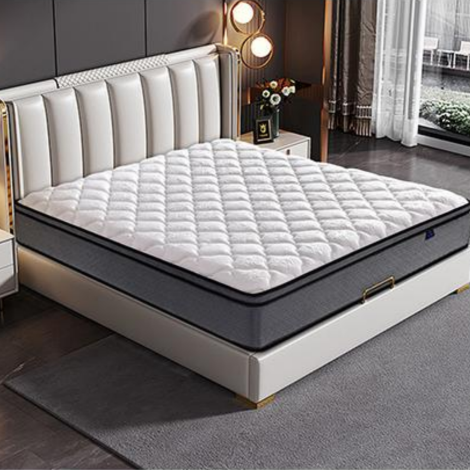
The support layer is the core of any mattress. It determines firmness, durability, and spinal alignment.
Bonnell Spring (Connected Spring System)
Springs are interconnected as a single unit
Strong overall stability
Reinforced edge support (often with steel frame)
Key benefit: Durable and firm support.
Pocket Spring (Individually Wrapped Springs)
Each spring is wrapped in a fabric pocket
Springs work independently
Better body contouring
Excellent motion isolation
Reduced noise
Key benefit: Ideal for couples or light sleepers.
Mattress Fabric Layer
The outer fabric layer directly affects the surface comfort and skin feel.
Common materials include:
Knitted fabric: Soft, breathable, and flexible
Woven fabric: Durable with a firmer texture
Synthetic fiber fabric: Cost-effective and easy to maintain
Mattress Comfort (Filling) Layer
The filling layer determines how the mattress feels when you lie down.
Common materials:
Latex
Memory foam
High-density foam
Palm fiber / jute
Each material contributes differently to softness, resilience, and pressure distribution.
Final Thoughts
A good mattress is not defined by a single feature but by the balance between support, comfort, and durability.
Before making a decision, consider:
Your preferred sleeping position
Firmness preference
Sensitivity to materials
Long-term durability needs
Understanding these layers and materials will help you choose a mattress that supports better sleep and overall well-being.